

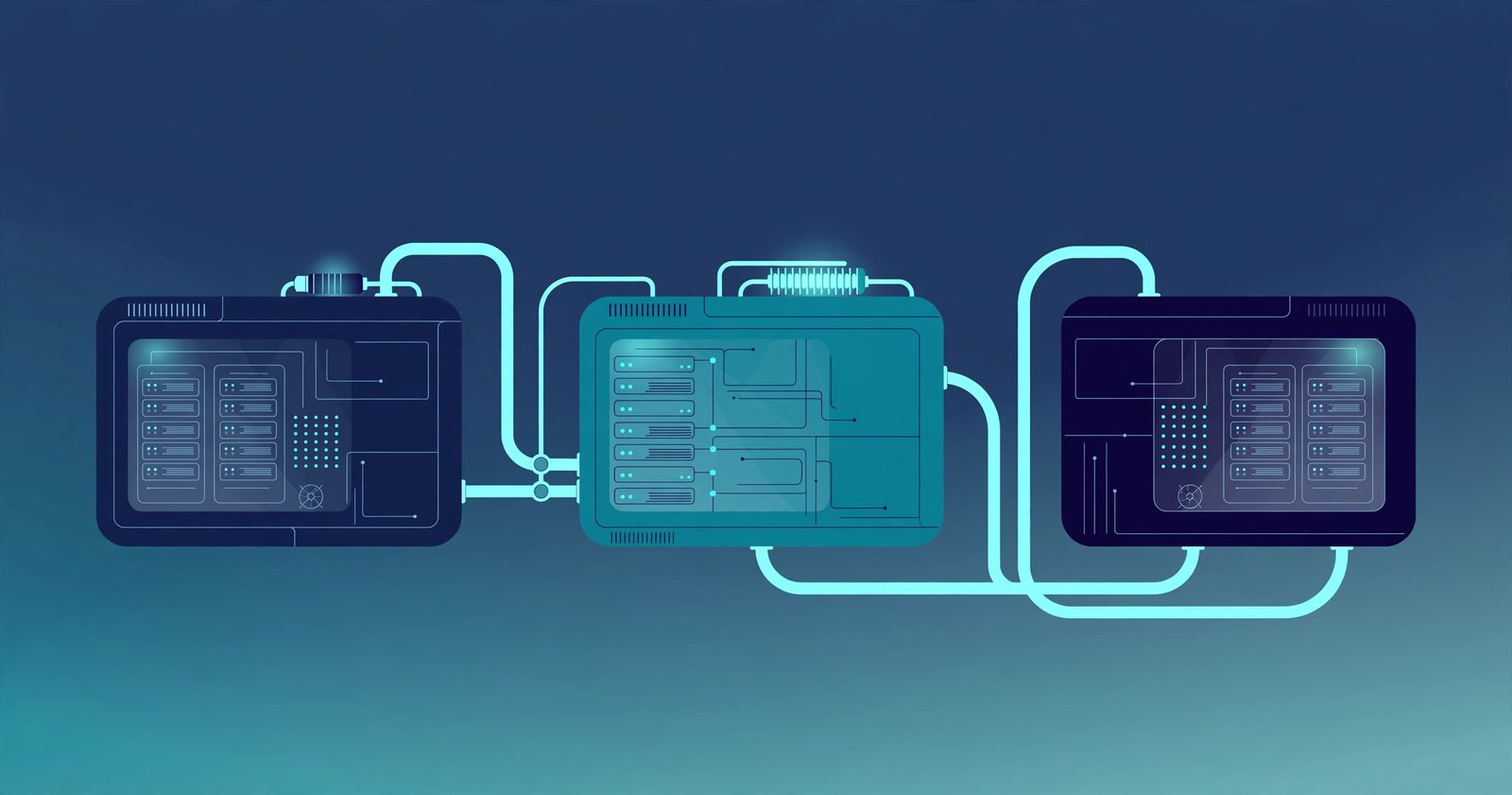
Among the AI-infrastructure announcements at GTC Berlin, one of the easiest to misread was NVIDIA’s DSX POD. It is not a chip, not a server you can order, and not a service a hospital switches on. In NVIDIA’s own description, DSX POD is a reference design for factory-integrated infrastructure containers — a standardised, pre-built way to deliver the physical plant of an “AI factory” — supplied and supported through NVIDIA’s delivery partners rather than by NVIDIA itself.
Why should healthcare buyers and founders care about a shipping-container data centre? Because the organisations now buying serious clinical AI capacity are increasingly health systems that cannot simply rent more public cloud. Patient data, imaging archives and data-residency rules all push compute back on site — and on site, the hard problem is often power, cooling, deployment time and who is accountable when something fails. This guide explains what DSX POD is, what its “factory-validated” label does and does not cover, and the questions to ask before signing anything.
Table of Contents
In this guide:
- What DSX POD actually is
- Why a health system would look at it
- What “factory-validated” does and does not cover
- The buyer’s question list: seven questions to send as-is
- Who this is not for
- When to get an independent review
- Frequently asked questions
What DSX POD actually is
Start with what it is not. DSX POD is not a product on a price list: NVIDIA publishes no pricing for it, and you cannot buy one from NVIDIA — worth stating plainly, because the announcement coverage often makes it sound like a purchasable appliance. It is a reference design: a validated pattern for building AI data-centre capacity as modular containers, which NVIDIA’s partners then engineer, manufacture, integrate, customise, service, support and deliver. The ODM partners NVIDIA lists include Bull, Dell, GIGABYTE, HPE, Ingrasys, Lenovo, Pegatron, QCT and Wistron, alongside container solution providers.
The idea is to move work from the building site to the factory. In NVIDIA’s description, the cabling, wiring, piping and functional validation happen before the container ships, which reduces the construction and installation work needed at the deployment site. NVIDIA frames the benefit as a faster “time to first token” — the gap between deciding you need AI capacity and that capacity doing useful work. Because the containers share a common, validated design foundation, a customer can replicate the same unit across sites, which NVIDIA argues makes deployments more consistent and capacity planning simpler.
One component deserves a buyer’s attention: DSX MaxLPS, the design’s power-management layer. Per NVIDIA, MaxLPS provides policy-driven power control, dynamic workload orchestration and high-fidelity telemetry, to maximise throughput within defined power limits. In plain terms, the system continuously decides how much power each workload gets, and reports on it in detail — operationally attractive, and, as we will see, a governance question of its own.
Where does this sit relative to the software layer? If you have read our guide to where NVIDIA technology fits into healthcare-AI product development, DSX POD is the floor underneath that stack: the physical environment in which training and inference run, rather than the frameworks and microservices your product is built from.
Why a health system would look at it
Three pressures make containerised, on-premises AI infrastructure a live conversation in healthcare rather than a curiosity.
Data that cannot leave the building. Imaging archives, genomic data and identifiable patient records sit under GDPR and data-residency obligations that make “just use a bigger cloud region” a governance decision, not a technical one. For many health systems, the question is not whether AI compute happens on site, but how to build it there without a two-year construction project.
Workloads are getting heavier. Medical imaging pipelines and agentic clinical workloads — treatment-planning support in areas such as radiotherapy is a good example — are compute-hungry in a way yesterday’s server room was not designed for. A modular design that replicates a known unit is easier to plan, approve and budget than a bespoke build each time.
Power is the real ceiling. Hospitals are power-constrained estates, and a design whose headline power feature is maximum throughput within a defined power budget is aimed squarely at buyers who cannot draw more from the grid. Treat that as NVIDIA’s claim rather than a measured result — but it addresses a genuine constraint.
What “factory-validated” does and does not cover
Here is the distinction this site exists to make. “Factory-validated” describes the infrastructure: the container’s power, cooling, cabling and interconnects have been functionally validated as a unit before delivery, so it should behave as designed when it lands. That is a real and valuable thing. Integration faults are a common cause of delayed, over-budget infrastructure projects, and removing them at the factory is a sensible answer.
It says nothing about the clinical workloads that will run inside. A validated container can host an unvalidated triage model, an untested escalation pathway or patient-facing content nobody has clinically reviewed, and run all of them with excellent uptime. Infrastructure reliability and clinical safety are separate properties, and the second does not arrive in the container. The buyer’s own governance — clinical validation, testing, incident processes, and the human oversight arrangements covered in our guide to human oversight in healthcare AI — remains entirely the buyer’s responsibility, on this infrastructure as on any other.
Buyers should also notice who is making each claim: the reference design is NVIDIA’s, the delivered system is a partner’s — and that gap is where accountability hides when a deployment disappoints. Hence the questions below.
The buyer’s question list: seven questions to send as-is
These are written to be copied into a procurement conversation with an ODM partner or container provider. None of them is hostile. All of them distinguish a serious delivery partner from a brochure.
1. Who validates our clinical workloads on this stack — you, NVIDIA, or us?
Expect the honest answer to be “mostly you”. What you are checking is whether the partner says so plainly and can describe what integration testing they do cover.
2. What telemetry does DSX MaxLPS collect, and does any of it leave our site?
MaxLPS is described as high-fidelity telemetry. Operational telemetry is not patient data — but in a health system, any data flow off site needs a governance answer, in writing, before deployment rather than after.
3. What does one container actually draw, and what must our estate supply?
NVIDIA publishes no power or pricing figures for DSX POD. The partner must put real numbers — draw, cooling, grid connection — in writing, because your estate team will be held to them.
4. Who patches and updates what, and on what cadence?
Firmware, drivers and the orchestration layer all age. Unpatched infrastructure underneath clinical workloads is a safety issue, not just IT hygiene. Get the patching matrix and the update cadence before signing, not during the first incident.
5. What happens to running clinical workloads when a container throttles or fails?
A policy-driven power system will, by design, sometimes constrain workloads. Graceful degradation and a hard stop are very different events at 3 a.m. Ask what each workload class experiences, and test the answer if you can.
6. Who answers at 3 a.m. — you or NVIDIA?
The design is NVIDIA’s; the contract will be the partner’s. Ask for the SLA, the named escalation path and what the partner can fix themselves versus what waits on NVIDIA.
7. What does a second site cost us — including in lock-in?
A common validated design makes replication easier; that is the selling point, and it is also the lock-in. Ask what is portable if you change partner later, and price the exit before you need it.
Who this is not for
Not small practices, and not early-stage founders. DSX POD is enterprise-scale infrastructure with no published pricing, delivered through a partner ecosystem to organisations building AI factories. If your product runs adequately on rented cloud GPUs, it should keep doing so. The useful takeaway for a smaller team is not the container; it is the question list above, which transfers almost unchanged to a cloud contract or any infrastructure commitment your product’s safety will depend on.
When to get an independent review
Infrastructure decisions lock in the environment a clinical product must be safe in for years, and they are usually made before the product’s own safety evidence is complete. That is why independent review belongs at the product layer, early: it examines the clinical content, escalation logic and user communication that no infrastructure validation touches. Our guide to preparing a healthcare-AI prototype for an independent clinical review sets out what to have ready. If you are building on infrastructure of this scale — or a buyer is asking you to prove your product deserves to run on it — an independent review of the product itself is the part of the evidence file only you can commission.
Frequently asked questions
What is NVIDIA DSX POD?
In NVIDIA’s description, DSX POD is a reference design for factory-integrated infrastructure containers for AI factories. The cabling, wiring, piping and functional validation are done in the factory, so less construction and installation work is needed on site. The containers are modular and share a common validated design, so the same unit can be replicated across sites. It includes DSX MaxLPS for policy-driven power control, workload orchestration and telemetry.
Can a hospital buy DSX POD directly from NVIDIA?
No. DSX POD is a reference design, not a product NVIDIA sells directly, and NVIDIA publishes no pricing for it. Delivery partners — ODMs such as Bull, Dell, GIGABYTE, HPE, Ingrasys, Lenovo, Pegatron, QCT and Wistron, plus container solution providers — engineer, manufacture, integrate, customise, service and support the delivered systems.
Why would a health system run AI in a container instead of the cloud?
Usually because of the data and the estate. Patient data and imaging archives carry GDPR and data-residency obligations that can rule out or complicate public cloud. A factory-built container also shortens deployment compared with building a data hall, and its power management is designed to maximise throughput within a fixed power budget — a real constraint in hospital estates.
Does factory validation make the clinical AI running on it safe?
No. Factory validation covers the infrastructure: power, cooling, cabling and interconnects behaving as designed. It does not validate the clinical models, escalation logic or patient-facing content running inside. Clinical safety still requires the buyer’s own validation, testing and human oversight, whatever infrastructure the product runs on.
What should a buyer ask the delivery partner before signing?
Seven things: who validates the clinical workloads; what telemetry DSX MaxLPS collects and whether any leaves the site; the container’s real power and cooling requirements, in writing; who patches what and how often; what happens to running workloads when a container throttles or fails; who provides 3 a.m. support and under what SLA; and what replication and exit would cost, including lock-in.
Building a healthcare-AI or pediatric digital-health product? DigitalProved provides an independent review of clinical content, patient-safety risks, escalation advice and user communication. Receive a prioritised written report and recorded walkthrough within five working days. Request a Product Review